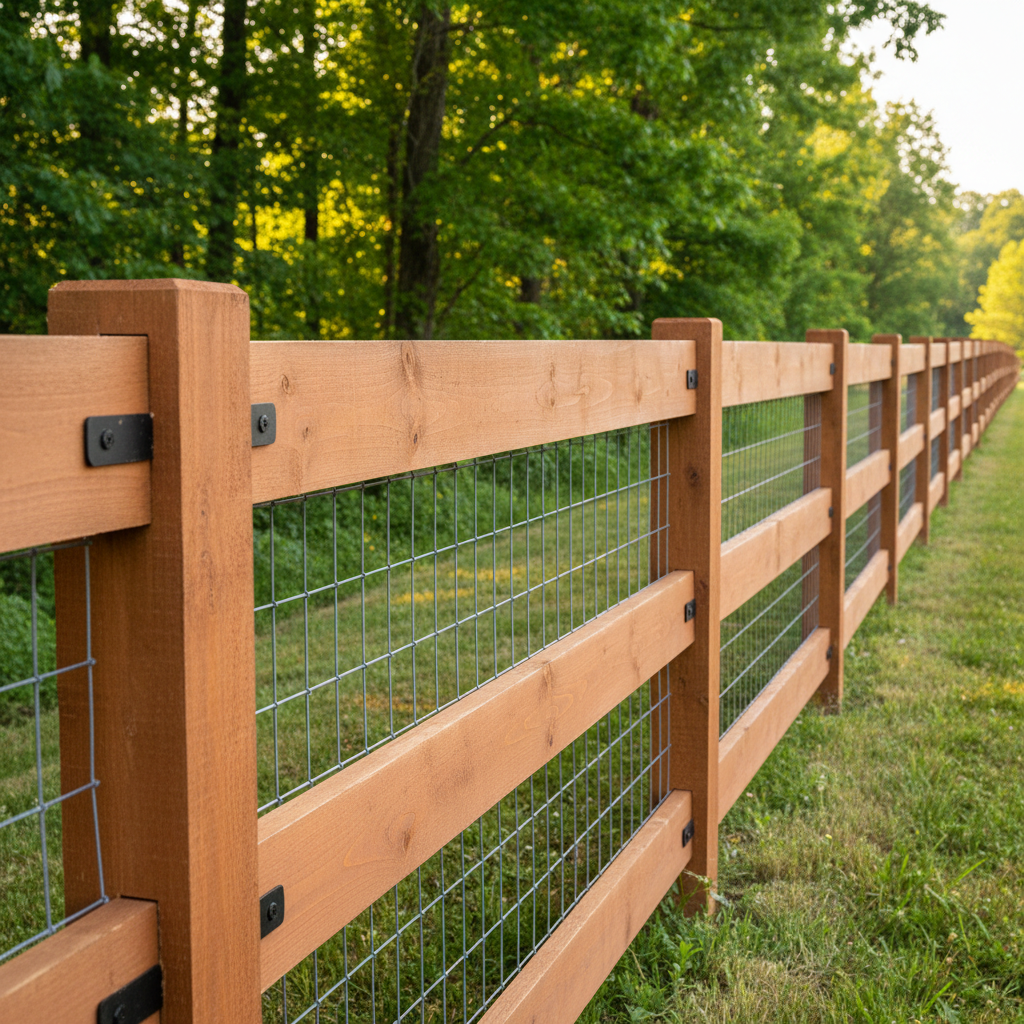
Driving a fence post into the rocky red clay around here is a difficult task. The soil conditions in this area are very different compared to what people deal with down in the flatlands. Over the years, Western Fencing has heard just about every question a property owner can ask regarding agricultural and livestock boundaries. Western Fencing will answer the most common questions right now without any sales pitch.
How deep do fence posts actually need to go in our local soil?
Here in Lenoir and Loudon County, you are dealing with stubborn clay and plenty of shale underground. If you skimp and only go two feet deep, frost heave and stubborn livestock are going to push that line right over. Corner posts and gate H-braces need to go at least three and a half to four feet down, anchored solid in concrete. Line posts can usually sit around thirty inches, provided you are driving or tamping them tight so the clay holds them firm. Western Fencing makes sure every post for pasture fencing is set properly to withstand the local climate.
What kind of wire holds up best against local cattle and horses?
High-tensile woven wire is usually your best bet for mixed livestock. The material has enough give that an animal will not break its leg if it bumps it, and it springs right back into place. You should stay away from cheap, thin-gauge hardware store wire. Between the summer humidity and the pressure from a curious steer leaning over to grab sweet grass on the other side, thin wire will not last past five years. Go with a heavy class 3 galvanized coating if you do not want to replace your agricultural fencing before the decade is out. Western Fencing installs reliable wire for homes and farms in Lenoir.
Should I use treated wood posts or steel T-posts for a pasture fence?
You should use both, but you must use them right. Your corners, end assemblies, and gate posts have to be heavy-treated wood—at least six inches in diameter. Steel T-posts make great intermediate line posts because they are fast to drive and cost-effective. Just make sure you are not spacing those T-posts too far apart. If you go past twelve feet in open pasture, a heavy wind or a pushing animal will bend them like toothpicks. For Lenoir property owners, Western Fencing builds strong fence structures using proper materials.
How do you handle rolling hills and creeks when running a new fence line?
Creeks are tricky because of flash flooding and debris rolling down after a heavy East Tennessee downpour. You never want to tie your wire directly across a creek bed where logs can catch it and rip the whole stretch down. Instead, you build a water gap or a floating flood gate that can swing up when the water rises. For rolling hills, you have to step your wire or follow the contour without creating massive gaps at the bottom where calves can crawl out. Western Fencing provides professional fence contractor services for properties with challenging terrain in Lenoir, TN.
Do I need a survey before putting up pasture fencing?
You always need a survey. Do not rely on old rusted barbed wire lines from forty years ago or what the neighbor says the boundary is. Property lines move, and getting halfway through a five-acre pasture build only to find out you are three feet onto someone else's land is an expensive headache. Pay for the survey first. Western Fencing always recommends clear boundary verification before any pasture fencing project begins.
How much maintenance should I realistically expect?
A good farm fence is not a set-it-and-forget-it deal. You will need to walk your lines at least twice a year—once after winter freeze-thaw cycles and once after heavy summer storms. Clear out fallen limbs, check your tension springs, and make sure brush has not grown up and shorted out your electric strands if you are running a hot wire. For homes and businesses in Lenoir, Western Fencing is here for all your fence maintenance needs.