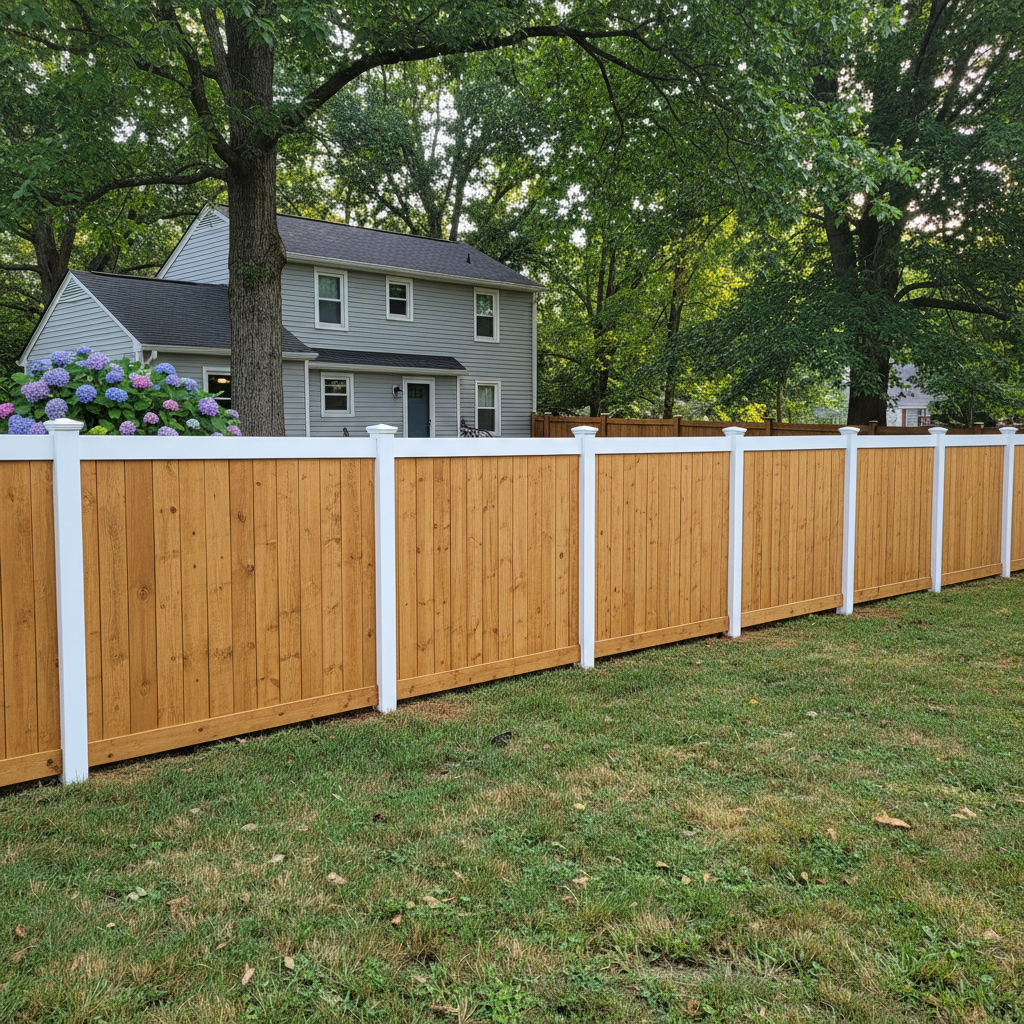
So, you've got a fence, and it's looking a little… tired. Maybe the sun's bleached it out, or the rain's taken its toll. You're probably wondering what it'll set you back to get it looking sharp again with a fresh coat of stain or paint. It's a fair question, and one I get asked a lot around Lenoir.
Look, I'm not going to tell you it's a one-size-fits-all answer, because it isn't. But I can give you some real numbers and tell you what factors we look at when we're putting together a quote. That way, you'll have a much better idea of what to expect.
What Makes the Price Go Up or Down?
There are a few big things that really swing the cost. Understanding these will help you understand your quote.
- Fence Size and Type: This is probably the most obvious one. A small picket fence is going to cost less than a sprawling privacy fence. The height matters too. A 6-foot fence takes more material and labor than a 4-foot one. Plus, the style plays a role. A solid panel fence is quicker to spray than a shadowbox or lattice fence with lots of nooks and crannies.
- Condition of the Fence: Is your fence brand new wood, or has it been sitting out for ten years without any love? If it's old, weathered, or has mildew, it's going to need more prep work. That means cleaning, maybe some light sanding, and possibly minor repairs before we even think about applying stain or paint. This prep work adds time and materials, which adds to the cost.
- Stain vs. Paint: Generally, staining is a bit less labor-intensive than painting. Stains soak into the wood, protecting it while letting the natural grain show through. Paint sits on top, offering a different kind of protection and a solid color. Paint often requires a primer coat, especially if you're going from a dark color to a light one, or if the wood is very porous. That's an extra step and extra material.
- Type of Product Used: You wouldn't put cheap oil in a good engine, right? Same goes for your fence. High-quality stains and paints last longer, offer better protection, and look better. They cost more upfront, but they save you money in the long run because you won't have to re-do it as often. I'm talking about good quality oil-based stains or acrylic latex paints designed for exterior wood.
- Accessibility: Can we easily get to all sides of your fence? If it's backed right up against a dense row of shrubs, or there's a steep hill, or it's really tight between your fence and your neighbor's, that makes the job harder and takes more time.
- Number of Coats: Most stains and paints will need two coats for proper coverage and durability, especially on raw wood. Sometimes, if we're doing a color change or the wood is super absorbent, a third coat might be recommended.
Typical Cost Ranges in Lenoir, TN
Alright, let's talk numbers. Keep in mind these are averages, and your specific project might fall outside these ranges depending on all those factors I just mentioned. These prices usually include labor, materials (stain/paint, cleaner, brushes, rollers, sprayer, drop cloths), and basic prep.
- For Staining a Wood Fence: You're generally looking at anywhere from $2.50 to $5.00 per linear foot for a standard 6-foot tall privacy fence. So, if you've got a 100-foot fence, that's roughly $250-$500. For a more intricate fence or one needing heavy cleaning, it could push towards the higher end.
- For Painting a Wood Fence: Painting tends to be a bit more, often in the range of $3.50 to $7.00 per linear foot for a 6-foot privacy fence. That 100-foot fence would then be $350-$700. The extra cost comes from the potential need for primer and the generally thicker application process.
- Deck Staining: While we're on the subject, if you're thinking about your deck too, that's usually priced by square footage. For deck staining, including cleaning and one to two coats, you might see prices from $2.00 to $4.00 per square foot for the deck surface and railings.
These ranges are for professional work. If someone quotes you significantly less, you need to ask a lot of questions about what they're using and what's included. You don't want a cheap job that flakes off in a year, especially with our hot, humid summers here in East Tennessee.
What Should Be Included in Your Quote?
When Western Fencing gives you a quote, or any reputable company for that matter, it should be clear. Here's what you should expect to see:
- Detailed Scope of Work: What exactly are they doing? Cleaning? Sanding? How many coats?
- Specific Products: What brand and type of stain or paint are they using? Oil-based? Water-based? Transparent? Semi-transparent? Solid?
- Linear Footage or Square Footage: The exact measurements they're basing the price on.
- Total Cost: The final price, no surprises.
- Timeline: When they expect to start and finish.
- Warranty/Guarantee: What kind of assurance do they offer on their work?
How to Avoid Overpaying (and Under-Doing It)
Getting a few quotes is always a good idea. But don't just go with the cheapest one. Ask questions. A super low bid might mean they're cutting corners on materials, skipping prep work, or they're not insured. You don't want any of those headaches.
Make sure they're local and have a good reputation. Check out their reviews. A contractor who knows the local climate, like how the humidity near Fort Loudoun Lake affects drying times, is going to do a better job than someone who's just passing through.
Also, don't be afraid to ask for references or to see examples of their work. A good contractor will be proud to show you what they've done.
Ultimately, a well-stained or painted fence isn't just about curb appeal; it's about protecting your investment. It'll make your property look better and help your fence last a lot longer. It's money well spent if it's done right.